
Greenland is About Climate Change and Rare Earth Minerals
Strong local resistance to foreign mining

The reason why Greenland has become an issue between the United States, Denmark and Icelanders is global warming. That has led to a stand-off between the US and Denmark, and local Icelanders. Greenland is semi-autonomous, has its own parliament, and is governed today by a center-left coalition.
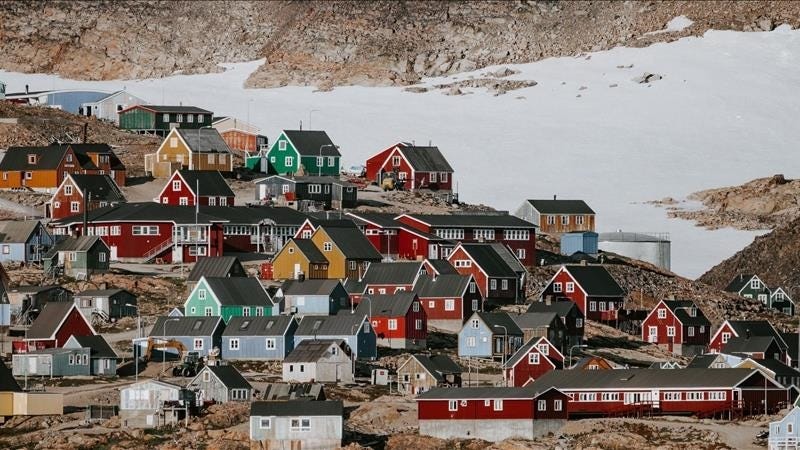
Two things could happen in future, assuming warming trends continue.
The first is that sea passage through the frozen Arctic would open a much faster sea trade route to the Pacific. If the passage becomes viable, it changes Greenland from a backwater land mass into one of strategic importance. The US knows quite a lot about Russia’s arctic operations, and its nuclear powered icebreakers. There are around seven to eight in service, including several new Project 22220 (Arktika-class) vessels like Arktika, Sibir, Ural, and Yakutiya, plus older ships like Yamal and 50 Let Pobedy, with more under construction to expand Arctic dominance.
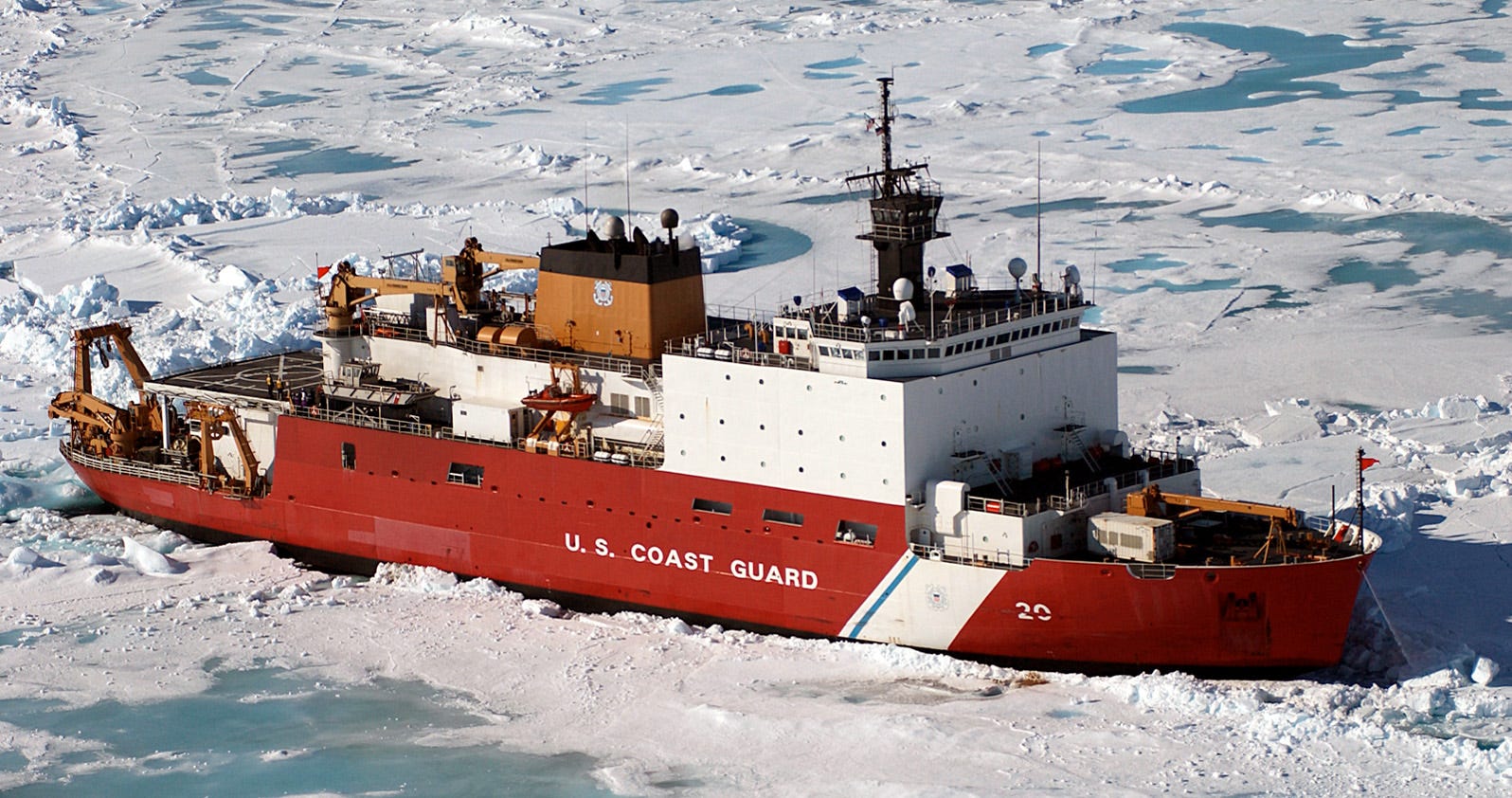
Comparatively, the U.S. Coast Guard operates three polar icebreakers: the heavy-duty USCGC Polar Star (1976) for Antarctic resupply and the medium USCGC Healy (2000) for Arctic research, supplemented by the newly acquired commercial vessel USCGC Storis (converted in 2025) to boost capability. The U.S. is actively recapitalizing its aging fleet through the Polar Security Cutter (PSC) program, with construction underway for new heavy icebreakers (PSCs) and medium Arctic Security Cutters (ASCs) to meet growing demands in the Arctic and Antarctic. None of the US icebreakers are nuclear.
The second big change is that much of the frozen land in Greenland --it is 80% ice--will become open for settlement and geological exploitation assuming climate change continues. Greenland is thought to have massive deposits of rare earth minerals, and Washington sees those deposits as critical to US national security. In the interim, the US is dangerously dependent on Chinese largesse, as China controls most rare earth production.
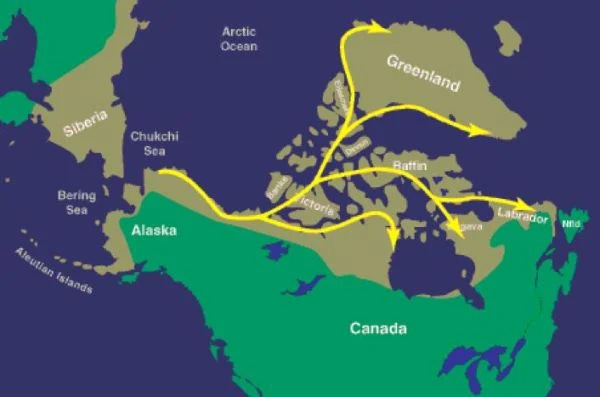
The US has been trying to pressure Denmark into selling Greenland. Denmark, and the local Greenland population, oppose selling to the United States. Greenland is 89% Inuit or Inuit-Danish. Most are descendants of Thule Inuit who migrated from North America, today’s Alaska and western Canada, around the years 1000 to 1200. While originally a Shamanistic culture, today’s Inuit in Greenland are predominantly Evangelical Lutheran.
Most of the local population prefer autonomy from all outside powers, but otherwise they accept a relationship with Denmark and, to a lesser degree, NATO protection. Most also have opposed mineral extraction, allegedly for environmental reasons (rare earth minerals extraction involves uranium deposits that are brought to the surface with the rare earths materials).
One of the largest rare earths projects, Kvanefjeld, located near the town of Narsaq (in the southwest of Greenland), was effectively shut down in 2021. That project was led by Energy Transition Minerals (ETM) and by China’s Shenghe Resources Holding Company, Ltd. Shenghe is a partly state owned company. Energy Transition Minerals is suing Greenland for damages, and for creating uncertainty for future mining investments despite the project’s potential for green energy minerals.
The primary U.S. military presence in Greenland is the Pituffik Space Base, formerly known as Thule Air Base. The base is crucial for missile warning, missile defense, and space surveillance, operating under a defense agreement with Denmark. It’s the DoD’s northernmost installation and hosts radar systems for tracking ballistic missiles and satellites. The Trump administration argues that this base is crucial for the planned Golden Dome ballistic missile defense system.
Reports say that the US is planning to offer up to $700 billion to buy Greenland. Greenland is a large landmass, 836,000 square miles, but only a fraction of the territory is inhabited by 56,000 Greenlanders. When the US bought Alaska from Russia in 1867, it paid $7.2 million, equivalent to $157 million today, far below the reported price for Greenland. That was before the Alaska Klondike Gold Rush (1896-1899) which added around 100,000 to Alaska’s population which, at the time, was between 50,000 and 80,000. The acquisition was described as Seward’s Folly (Secretary of State William H.). The US was said to benefit from fishing, fur trade and timber. Looking past the subsequent Gold Rush, oil did not become a significant asset until 1957. The Russians did the deal in part because they were broke, and in part to keep Alaska out of Britain’s hands.
If climate change is the driver behind the rise of Greenland’s importance, environmental restrictions are blocking the exploitation of its resources. The US is in good shape when it comes to defense requirements, despite the rhetoric. Unless there is pushback from the locals, which cannot be ruled out, the US has received good cooperation from Denmark, buttressed by a 1951 pact for U.S. military bases in Greenland which includes Pituffik. The US, at least so far, has not asked for more defense installations on Greenland, or any significant expansion of the Pituffik facility.
The most impactful issue is potential mineral exploitation. The bottom line is that the locals in Greenland oppose such mining operations, not only for alleged environmental risks, but because large mining operations will bring in many foreigners to work the mines and transport the minerals. Greenland maintains strict laws making it difficult for foreigners to work there. The system is managed by the Danes and applicants must go through the Danish Immigration Service. The system is heavily biased to Nordic applicants, although the Danes respond mostly to pushback from the local Greenlanders.
The resistance to change and intervention is a fact of life for any deal on Greenland. American interests can’t be met under the current restrictions and present-day local ideology, especially if the most urgent US interest is Greenland’s minerals. Even an outright purchase would face conflict and resistance.
Meanwhile the US continues to face a serious shortage of rare earths and an unacceptable and dangerous dependence on China.
I think we can forget climate change as a mean for more easy access to the goodies in Greenland's interior. Even if the mean temperature should rise 5°C, it would take millennials to make a serious dent in Greenland's ice sheet (that is, unless a new ice age arrives in the mean time)
Thanks Stephen. A couple of comments. I. I don't think anyone should forget how the Danish government has historically treated the Greenlanders. Re. The forced sterilization of Greenland women in the 1960s and 1970s. The block grant and a weaselly apology last year by the Danish prime Minister doesn't right that wrong.
2. The US has an enormous technology gap to close with the Russians wrt their nuclear ice breakers. How will this technology gap be closed? How will the US police a trade route that it can't access or assist keep open?
3. The minerals.. are these proven resources? And what happened to the much published Ukraine mineral riches?