
Kellogg’s Partition Plan for Ukraine
Partition Remains a Possible Option, Just Not Kellogg's Version

Is a partition plan a realistic outcome for ending the Ukraine war. General Keith Kellogg’s proposal appears to have already encountered difficulties. However, that does not mean that some type of partition is out of the question.
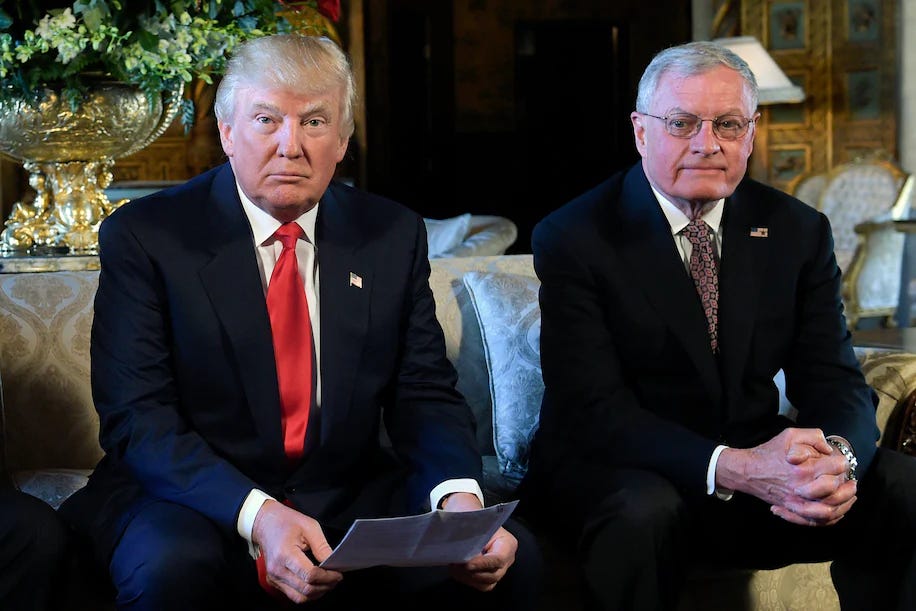
Kellogg’s “plan” would carve up Ukraine into four zones. British, French, and Ukrainian troops, with the potential for others to join, would make up the first zone, western Ukraine. That zone would stretch from the Polish border to the Dnieper river. The second zone. East of the Dnieper would be under Ukrainian control, defended by Ukraine’s army. A third zone would be a buffer area with a depth of 18 miles. A fourth zone would include the Russian “occupied areas” including Luhansk, Donetsk, Zaphorize, Kherson and Crimea. The Kellogg plan does not address the actual boundaries.
The Russians have already said, referring to General Kellogg’s plan, that putting NATO or NATO-state soldiers in Ukraine is unacceptable. The Kellogg plan leaves the juridical status of the areas with Russian troops unclear and it leaves Ukraine’s army at full strength. One implication of the plan is that the war could re-start at any time.
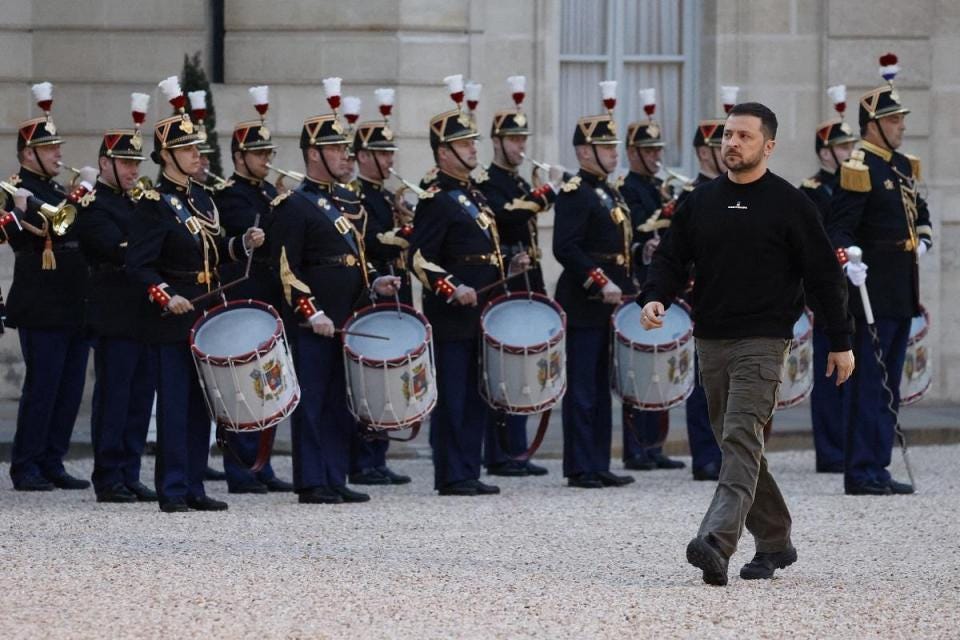
Taking a step back, it is worth asking what Russia’s end game may be and the likelihood they will achieve it.
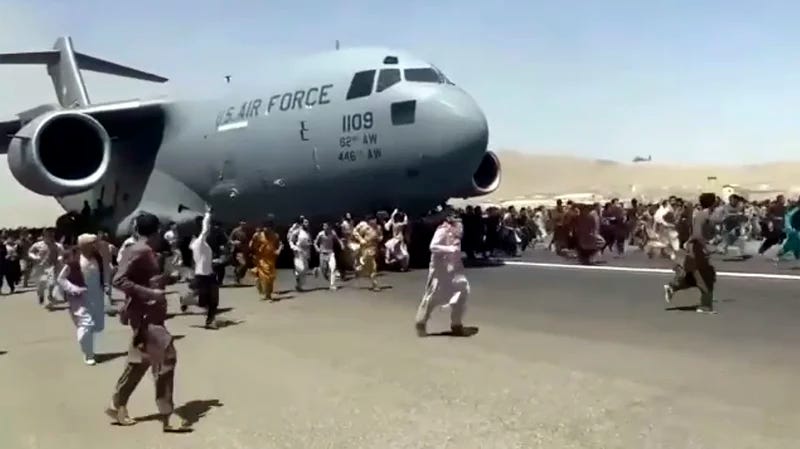
The first and clearly the most important point is that the Russians are attempting to restore their relationship with Washington and want to persuade President Trump to support the immediate Russian goal of legitimizing those territories Kellogg puts into the fourth zone. Were President Trump to accede to Russia’s territorial objectives, essentially granting de jure legitimacy status to the Russian territorial gains in the war, it would be highly controversial in Congress. Trump will face censure for acquiescing in an illegal invasion of Ukraine. This is more problematic than Biden’s withdrawal from Afghanistan, where the US just left by pulling out its forces. While the Taliban took over as the pro-US Afghan government disintegrated, the US did not recognize the new government or offer any overt concessions to them. Today, the US maintains an Afghan affairs office in Doha, Qatar, but has no diplomatic relations with Afghanistan.
The Kellogg plan is not, despite his statements, like the Berlin agreement. People remember that at the end of World War II, the Allies divided Germany into four zones—the US, UK, France, and Russia. Similarly, the Allies split Berlin, Germany’s capital within the Soviet zone, into four sectors (though the US, British, and French sectors later merged).
The background of the German partitioning came about because of serious disagreements among the allies over Germany’s future, and a shift in the outlook of the US and UK who saw Germany as a geopolitical asset and the USSR as a threat.
For Ukraine, officially the conflict is between Ukraine and Russia, with third parties (especially NATO) supporting Ukraine with arms, advisers, technical support, training, supplies, financial aid and intelligence. Unlike Ukraine, the Russians have been mostly on their own, although China has helped them under the table, as has North Korea, even supplying a few thousand soldiers. Russia’s major advantage is a significant military-industrial base and a large recruitment pool for soldiers. Ukraine, on its own, would have long since disappeared: it is entirely a creature of NATO from a support and resources point of view.
Some kind of partitioning of Ukrainian territory is, however, not out of the question in the future. In fact, it could be an outcome under some circumstances that are not far-fetched by any means.
Looked at along a timeline where the negotiations either fail or drag out without resolution (which may be convenient for the United States and for the Russians, especially if Trump and Putin can’t find a mutually acceptable formula and the Zelensky government continues to act in the mode of enfant terrible), the Russians may be successful in defeating Ukraine’s army on the battlefield or, short of that dramatic result, destroy a significant part of the Ukrainian army in the field, precipitating a real crisis in Kiev. Zelensky, who cannot really negotiate with Russia (assuming he actually wanted to do so), would face an enormous risk keeping his government in Kiev. The prospect of being captured by the Russians or facing replacement by extreme nationalists in the army and intelligence services, Zelensky may find it convenient to retreat to the west, potentially establishing a Ukrainian government in Lvov, which is far enough away from Russia to be considered more or less secure. With a new government in Kiev, likely pro-Russian, Ukraine would be practically partitioned — essentially Kellogg’s Zone 1 would become the Zelensky-led Ukraine headquartered in Lvov, and Russia would control everything east of the Dnieper, even possibly Odesa, a city founded by Catherine the Great which Russia considers as Russian. If this scenario plays out, then some sort of European rescue army could plant itself in Zone 1, avoiding a total defeat for Europe, the EU and NATO.
There are many downsides and upsides to this scenario. NATO will probably remain in a part of Ukraine, and Russia will not get international recognition for its military conquests. This would reduce the US and NATO burden of militarily, economically, and politically supporting Ukraine. The US would be free to focus its attention elsewhere, mainly Asia and China, and rebuild stockpiles of weapons depleted during the Ukraine war. Europe could boast it stood by Ukraine, but without the consequence of the war spreading outside Ukraine’s borders. NATO would not lose face, nor would Washington.
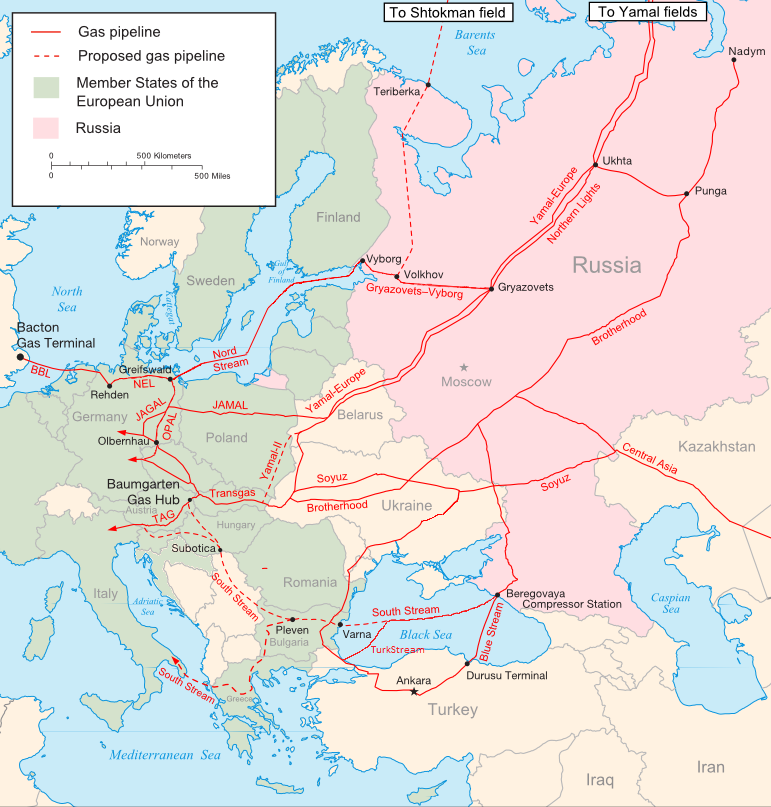
There is already talk in Europe about reopening Europe (especially Germany and France) to “cheap” Russian energy. That’s a signal that the endgame is in sight. Europe cannot afford an economic collapse that would create upheaval on the continent, stimulate social revolution, and purge the ruling elites responsible for the mess. Even Europe, despite all the war talk, will have to face the necessity of adjusting its vision or face chaos.
I am surprised that you take the General's plan seriously.
I am also surprised you seem to not know Russia's intentions and what they consider their bottom line, given that each time Russia increases their demands, they announce it in many forums that appear in translation in US media, repeatedly.
I understand that many in the US believe that Russia never defends its Red Lines because of Biden propaganda. Perhaps the Kellogg Plan sounds possible because of "hope" and because Americans tend to ignore the public opinion within Russia, where ~1000 people volunteer for Military service, daily, and have been doing so for much more than a year. For comparison, the US Navy operations are restricted because it is under-manned and there are plenty MSM stories about having to restart the Draft and that the Pentagon is considering reducing troops strength, for lack of qualified applicants. Few NATO combat troops from other countries exist (other than in Turkey) and Russia has explicitly warned that, if they were deployed in Ukraine, they would become priority targets.
Ignoring territorial demands, I will mention Russia's NO NATO Red Line demand, which the Kellogg plan explicitly ignores. Perhaps you do not construe NATO members troops controlling or stationed in parts of Ukraine as NATO control as NATO. Russia does. It would put NATO countries within easy striking distance of what Russia considers part of Russian. If Russia ends up with the land it occupies today, it will not tolerate any NATO troops or installations in what is left of Ukraine. And it will require that the newly redrawn Ukraine military is limited in size. How till it do that under the Kellogg Plan? Of course, they are incompatible.
Russia says they will not accept this. And given that they are WINNING, why should they?
Using your WW2 partition of Berlin example:
Germany was the loser and had no choice but to accept the loss of some parts of Germany and the partition of Berlin, as you know. That the US got the Berlin golf course and the other victors did not, was the result of Eisenhower's love of golf and a negotiation between the VICTORS.
Russia has demands as the Victor and if its NATO opponents, part of the LOSING coalition who have financed, planned, directed and partly staffed the war, are not ready to concede that Russia is the Victor, I am afraid the world will have to deal with the war continuing.
This will cost Russia but it will be a greater cost in attrition of Ukrainians and NATO manpower, as well as to the NATO treasuries and economies, as well as their stocks of war materials and equipment.
There has been a logical reason why General Kellogg was not the envoy to discuss things with the Russian. There seems to be little reason why the General could not have happily worked for President Biden, who promised more war and the fantasy that the US would win.
I recall President Trump promising to end the war. I recall that being well-received by the voters, who were not in favor of spending $100s of Billions more to continue to try (in the losing attempt to) prop up an undemocratic Banderite regime and achieve the American goal of Russian regime change and dismemberment.
Permitting NATO troops in Ukraine would only serve as a shield behind which Ukrainians (or "Ukrainians") could take free pot shots at Russia, then invoke Article 5 if Russia responds.
Anyway, the endgame is far from near. The only reason Trump has not escalated already is because of the desire to put the War On Russia on pause so that NATO can prioritize the War On Iran.