
Many Risks in Trump Battleship Program

The proposed Trump class Battleship (officially the BBG(X) guided missile battleship program) is planned to be the largest warship built by the United States since World War II. The entire project represents numerous gambles, any one of which could tank the project.
Here are some of the risks.
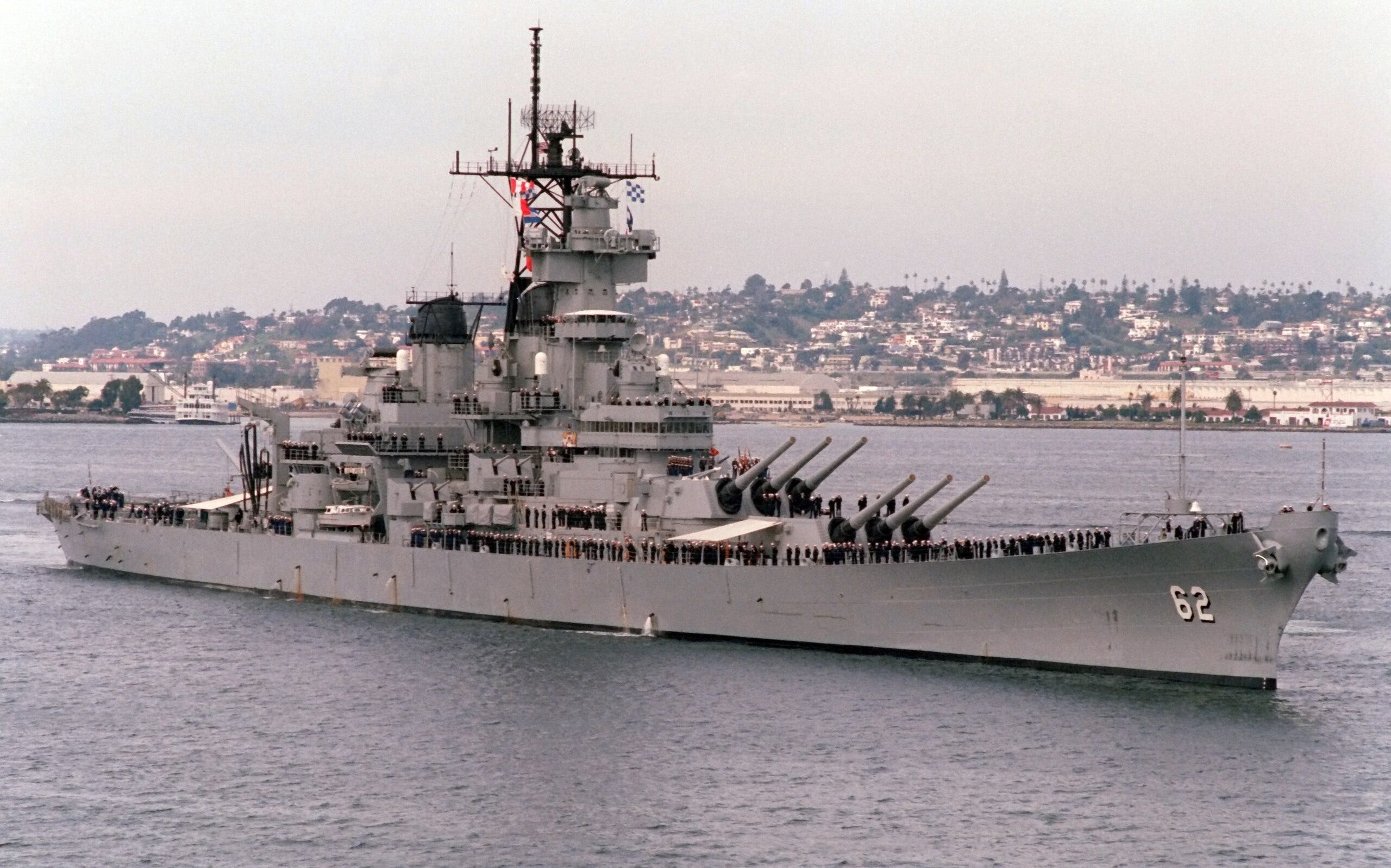
(1) The US has no contemporary experience in designing and building a battleship. The last time it was done was between 1943 and 1945 when the US built four Iowa class battleships. They were upgraded and rehabilitated a couple of times until finally decommissioned in the early 1990s. All four are now museum pieces, the Missouri at Pearl Harbor, the Iowa in Los Angeles, the New Jersey in Camden, NJ, and the Wisconsin in Norfolk, Virginia.
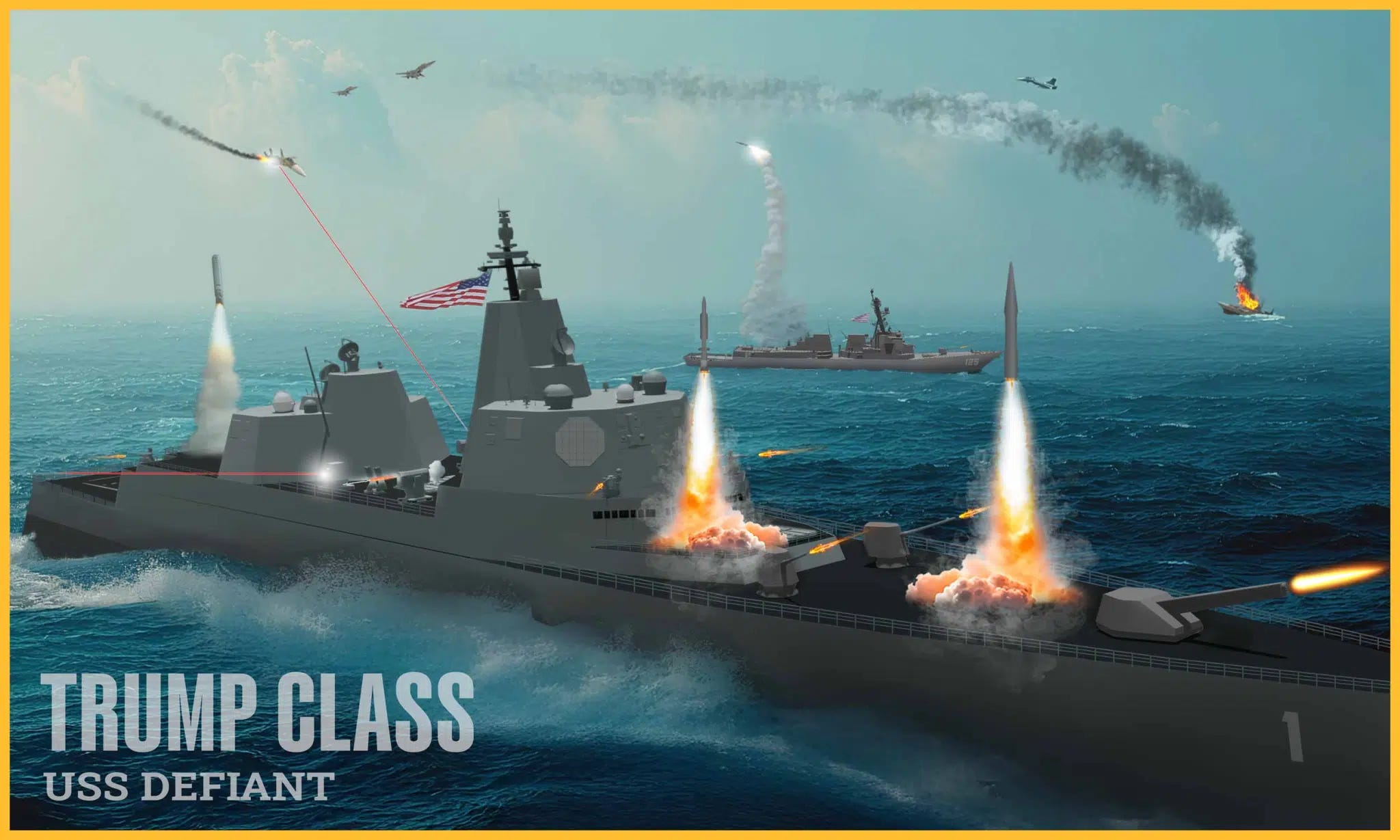
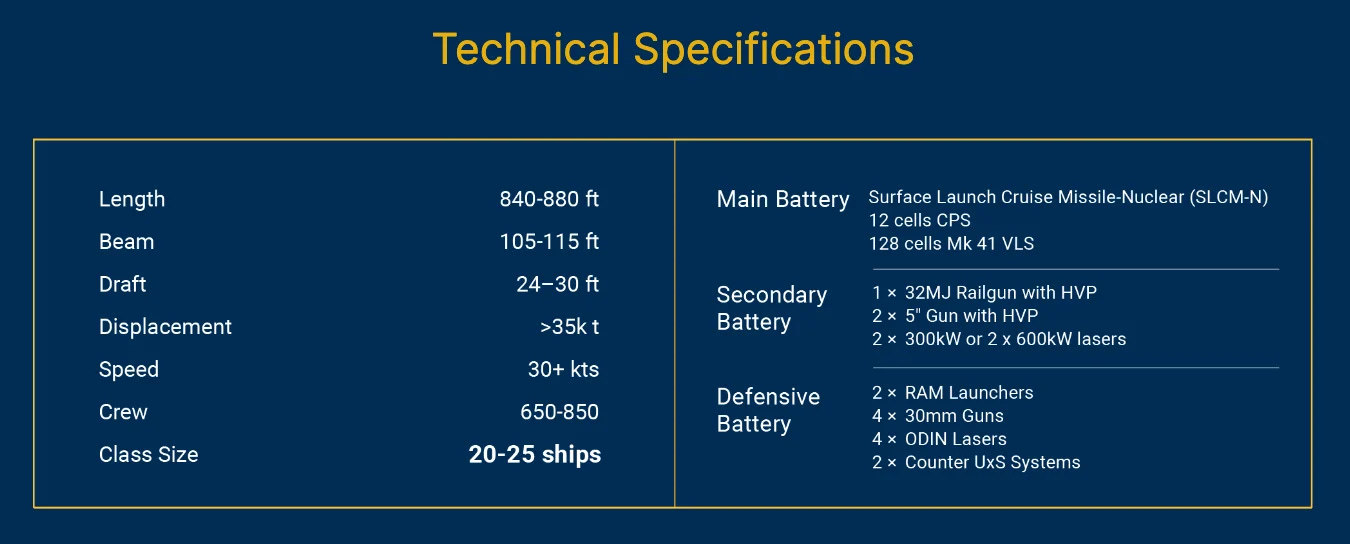
According to what we know so far, the first Trump-class ship will be dubbed the USS Defiant. It will weigh (empty) more than 35,000 tons and be conventionally powered. It will be somewhat slower than the Iowa class ships.
At present there is no suitable design for the Defiant, so naval architects will be busy figuring out a proper configuration, assessing power requirements for the vessel itself and onboard weapons, and determining how the ship will be constructed.
In Italy, when building its Cavour aircraft carrier, the Italians lacked a navy yard big enough for the proposed ship. They opted for modular construction and actually welded the ship parts together offshore. US Navy planners may have a similar idea: fabricate the ship in segments, either constructed in the US or abroad (likely in South Korea), then assemble the whole at a site in the United States.
One report says that South Korea’s Hanwha has been tapped by President Trump to build the Defiant.
A modular approach is new ground for US Navy yards. It isn’t clear this approach will be selected (as it entails significant risk), but there are not too many options. A key problem is the lack of skilled manpower and engineers needed for a project on this scale.
Most reports say that actual construction will not begin until the 2030s.
(2) There is no hard information on the design of the ship’s conventional power plant or who will supply it once the actual requirements are defined. Because of the laser weapons and railgun, the ship will also need a vast amount of power storage onboard.
(4) Many of the proposed weapons onboard the Defiant are unproven and experimental. This includes hypersonic weapons, the rail gun, the proposed Surface Launched Cruise Missile with a nuclear warhead, even the 5 inch gun featuring a hypervelocity projectile (HVP).
(5) So far as is known, no mission studies for the BBG(X) guided missile battleship program have been undertaken. How will this vessel be used with existing capabilities (destroyers, cruisers, submarines, aircraft carriers)? What advantages does it bring, especially against major potential adversaries?
(6) How will the BBG(X) guided missile battleship be protected from a well-equipped enemy with missiles, guided weapons, drones, submarines etc.? Recently there have been many who question the viability of large aircraft carriers facing long range precision weapons (especially from China). It isn’t an unfair presumption that a massive battleship would face the same sort of risk.
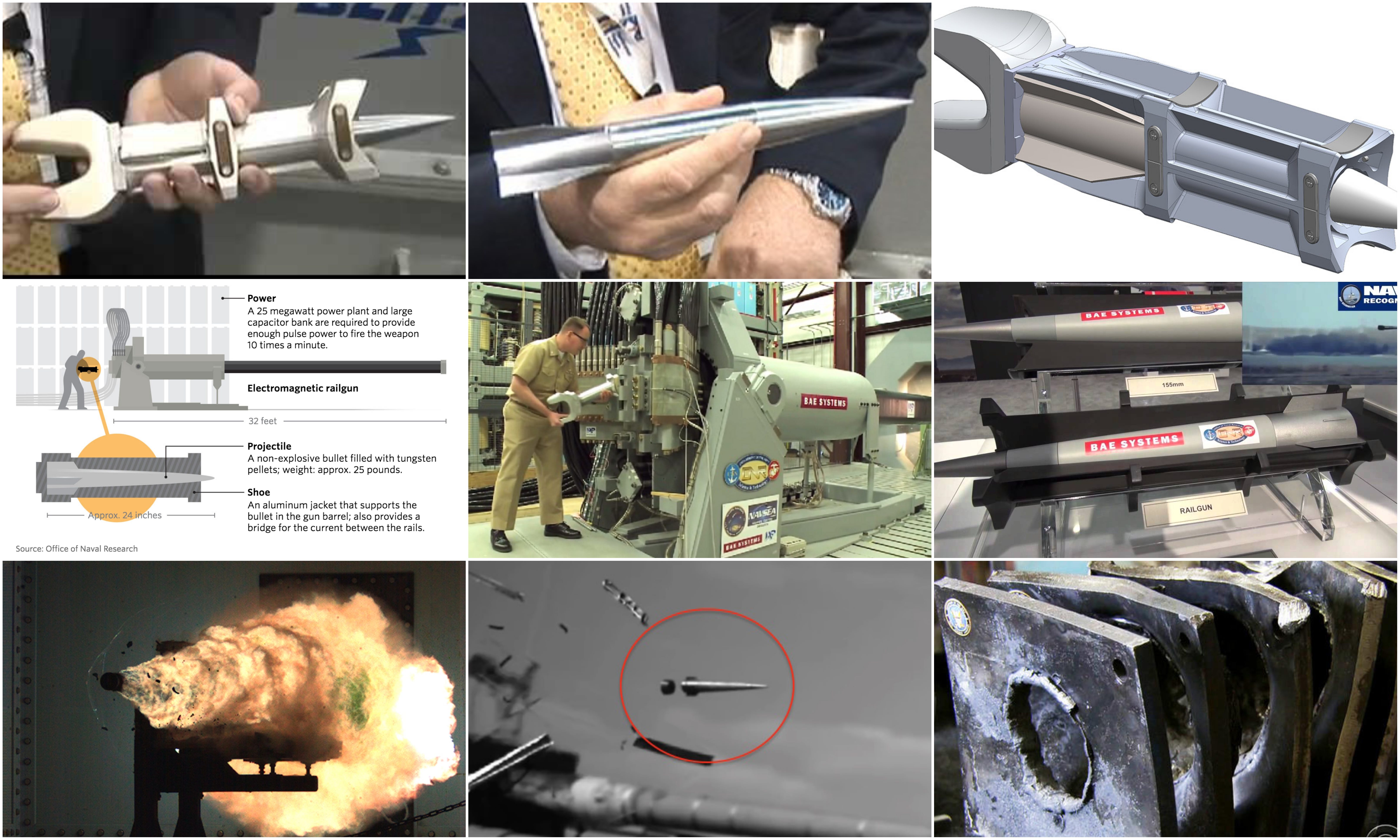
(7) Some of the proposed systems, such as the 32 Megajoule railgun, are still developmental and fraught with serious problems, especially overheating and huge power requirements. If these systems are prematurely installed and fail, they could cause onboard accidents including explosions and fire that could cripple the battleship.
(8) The railgun is not the only system where testing and development still are needed before such systems are permanently built into the warship’s design. One of them, the SLCM-N (Surface Launched Cruise Missile with Nuclear Warhead) is mostly untested and undeveloped, requires a special launch system based on a cold gas system to eject the weapon from the ship and does not yet have a nuclear warhead that has been approved and is safe. Like other systems on the proposed warship, it is far from clear why SLCM-N is needed, since Trident missiles from submarines can deliver small nuclear warheads on target. The argument for SLCM-N is it would act as a deterrent to an adversary: in fact, such a system may prompt an adversary to field even more nuclear missiles (conventional and cruise).
(9) There is no existing fire control system for this new class of ship, one that can optimize and integrate the onboard ship’s capabilities, network with and coordinate with existing assets including surface ships and submarines, and handle new threats as they emerge (which is certain to occur). When one considers the ongoing software problems with the F-35, a complex set of weapons on the Defiant and integrating it with the existing fleet (naval and air) is a major developmental challenge.
(10) A big risk is affordability. At the moment some numbers are being thrown around, $10 to $15 billion per ship, but surely this estimate will grow much larger and will have to factor in the weapons carried by the ship. Given the time lines, inflation, and delays, a price in the $25 billion price bracket would not be surprising for one ship (two are initially planned and the Navy says it wants to buy 25 ships before it is done).
The obvious question is what is the payoff for the huge costs since all the proposed systems can be fitted on smaller ships at far less expense. Likewise, the project will eat up existing meagre shipyard and development resources, meaning that other programs inevitably will suffer as a result.
At the end of the day Congress should carefully consider whether the risks outweigh the benefits. Minimally Congress should carefully review the justifications for this project and its impact overall on US Navy programs and readiness.
I haven't seen such a cockamamie military idea in a long, long time.
How do they imagine this is going to work? What is the benefit even of concentrating all these resources on one platform?
Have they done simulations about what it would take to defend such a vessel against:
1. Large swarms of "Sea Baby" type drone boats?
2. Autonomous torpedoes?
3. Waves of aerial drones?
4. Smart mines, analogous to the lurking FPV drones being used in Ukraine, which wait on the seabed?
5. Other new weapons which flow from the revolution in drone/autonomous weapons technology?
Those guys should be spending their time on trying to figure out how are existing capital ships -- our $12 billion aircraft carriers will survive the new realities.
At present the US Navy has problems sorting out a workable, affordable and capable frigate - and have been working on this issue for the last 10 years already and still have not solved it. How the hell are they going to get behemoths like battleships going, let alone get all the technical and logistical problems identified in the article solved. It would be better to build autonomous arsenal ships controlled from existing naval platforms as force multipliers than spend enormous sums on this gold-plated bomb magnet.