
The Struggle Against the Drones
Counter Drone Technology is Gaining Traction

Drones have not only become a potent battlefield weapon but they also have deep strike capability. Ukraine has used them to stymie Russia on the battlefield and to destroy high value targets on Russian territory, including critical infrastructure and important military installations. The Ukrainians have scored victories against Russian strategic bombers and AWACS aircraft, destroyed long range radars that are part of Russia’s nuclear defense force, and blown up oil installations and port facilities as well as significant parts of Russia’s Black Sea fleet. Ukraine’s use of uncrewed surface vehicles at sea has allowed Ukraine to strike Russian ships, port infrastructure, and Russian bases, such as Sevastopol.
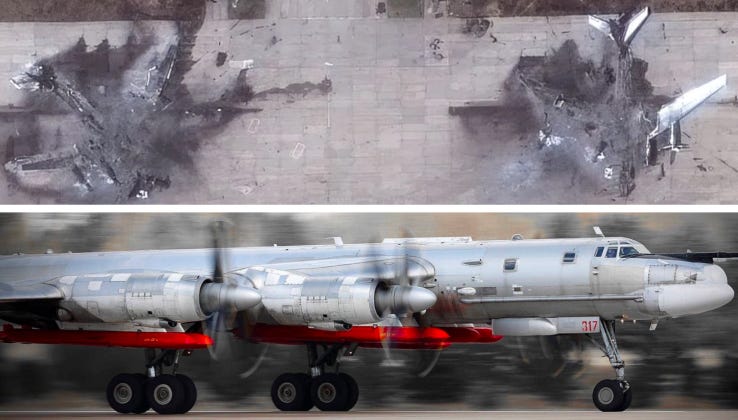
Typically Ukraine launches drone attacks in waves and swarms. To draw off enemy fire, mixed into the lethal drones are decoy drones that are mainly glued together plywood and plastic machines. The Russians do the same thing, although Russian attacks deep in Ukraine also include long range ballistic and cruise missiles.
Drone war is not confined to Russia and Ukraine. Iran has launched large numbers of drones, many of them aimed at US military operations and the US fleet operating in the Gulf Region. Between February and March, 2026 Iran fired around 1,000 to 1,500 drones at US and allied facilities and infrastructure, including political targets, and at US Navy and Marine ships at sea. Iran has claimed it hit the USS Abraham Lincoln (CVN-72 aircraft carrier)—with dense salvos of drones and missiles, fiercely denied by CENTCOM. The Houthis in Yemen have repeatedly claimed to have hit and forced the retreat of the USS Harry S. Truman in the Red Sea using long-range kamikaze drones. The Houthis have also used drones, including uncrewed surface vessels (USVs) against commercial ships in the Red Sea and Gulf of Aden and have repeatedly
Hezbollah also is using drones in unprecedented numbers, particularly in the northern Israel and southern Lebanon areas. Hezbollah utilizes sophisticated tactics, gets lots of operational help from Iran, and increasingly deploys fiber optic drones. Hezbollah’s drone supply chain is a highly decentralized, multi-tiered network. While Iran is the absolute strategic architect, the actual acquisition of parts relies on global dual-use procurement pipelines, front companies, and domestic workshops hidden inside Lebanon.
Drone interception rates, claimed and real, are insufficient to balance the damage that can be caused by a drone. Russia, for example, is able to stop around 70% to 85% of attacking drones, facing around 150 to 300 drones over its territory every night. The US and Israel probably do better statistically, but the drones that get through are proving to be very costly and, in Israel’s case, damaging to citizens and soldier’s morale.
Meanwhile, the US has failed to shut down Russia’s, Iran’s and proxy’s supply networks (and in fact has hardly tried to do so). Russian and Iranian weapons often are found stuffed with US components along with myriad parts from Asia (particularly but not exclusively) China. Instead the US and its allies and friends are focusing on counter-drone systems as a solution to the drone challenge.
Counter Drone Technology
Counter drone technology is evolving very quickly, but there are significant hurdles countering both long range and short range threats.
Drone Killers
Both Ukraine and Russia have developed drone killers which are in fact specialized drones that hit incoming lethal drones and destroy them. The Ukrainian system that is locally produced has shown considerable promise and Ukraine is now marketing the product in the Middle East and to NATO.
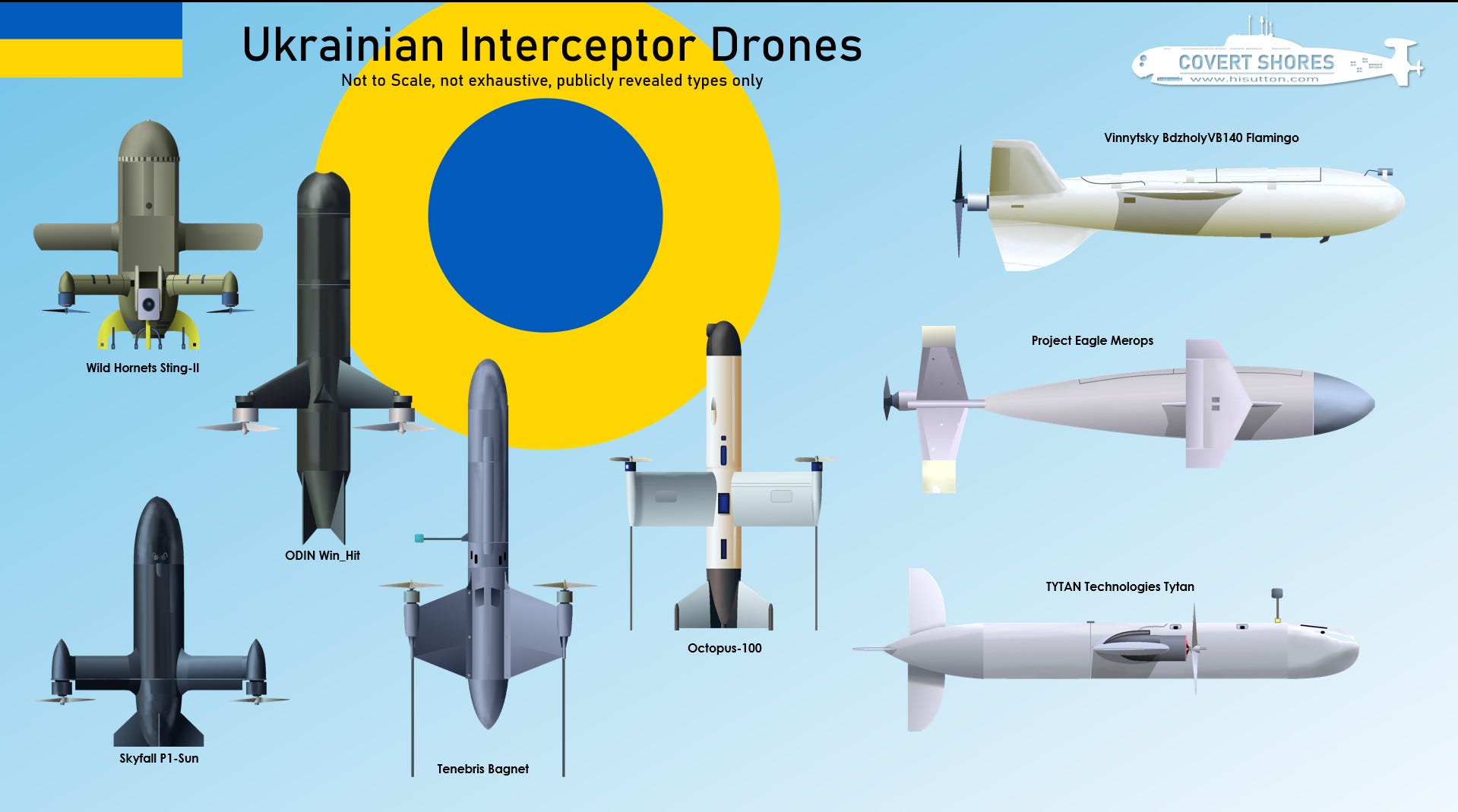
The Ukrainian solution that has gained the most attention is called Sting. It was developed in Ukraine by a volunteer engineering group called Wild Hornets. It is a bullet-shaped 3-D printed aerodynamic frame featuring a pursuit speed of 213 mph (343 km/h) and a service ceiling of around 10,000 feet (3,000 meters). Its operational radius is about 20 km (12.4 miles). It is equipped with a home-built thermal imaging camera so it can take down enemy drones at night. The Sting interceptor costs $2,100. Ukraine has developed a number of specialized interceptor brigades (e.g., the 412th Nemesis Brigade), claiming a 95% success rate. The system is operated by a pilot but the latest versions feature autonomous interception using an automation layer in the Sting software. The AI computer vision module can lock onto the silhouette of an enemy drone, such as the Geran 2, and navigate autonomously relieving the pilot of target responsibility.
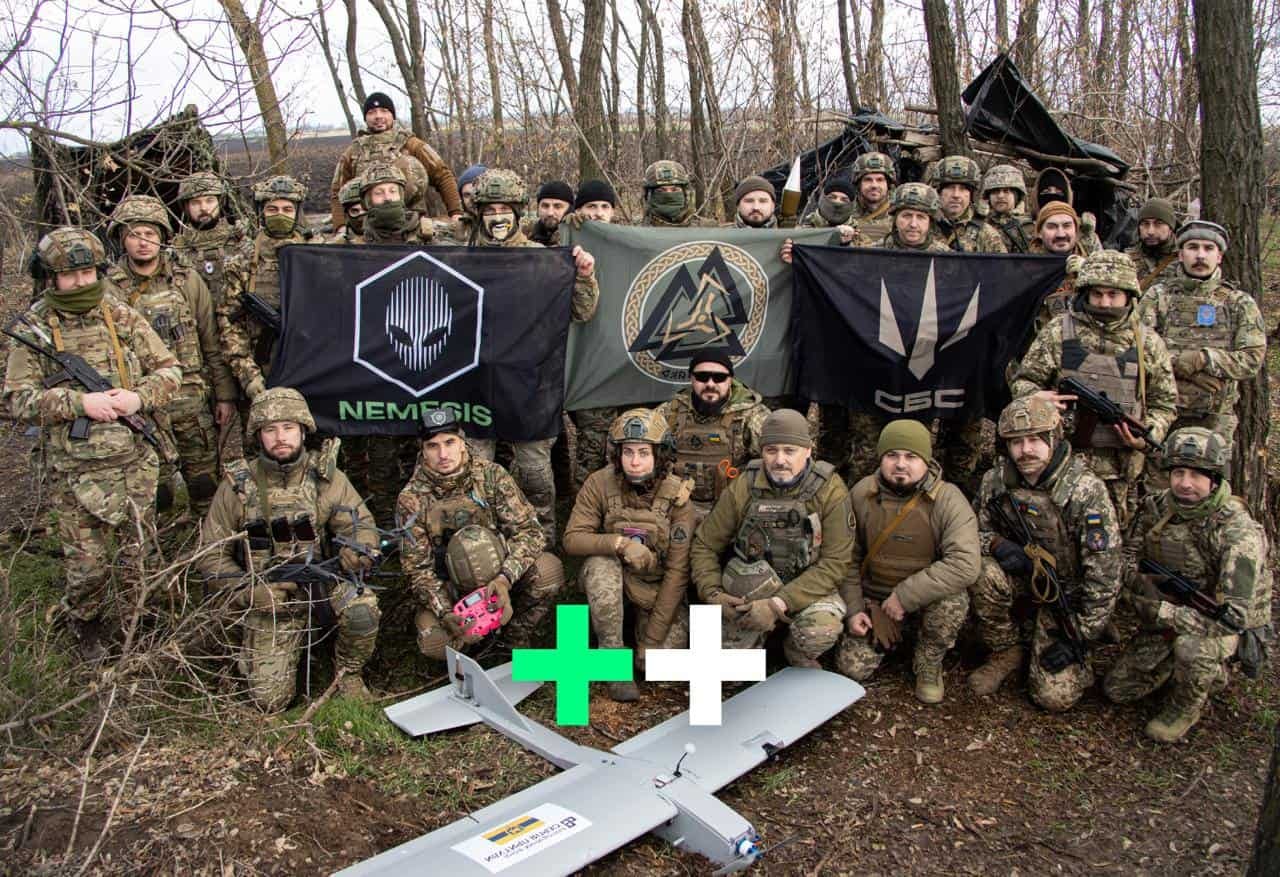
Ukraine uses a system called Hornet Vision, a remote control architecture, meaning the pilot/operators can be far away from the front line, so the Russians cannot target them easily.
Ukraine has a number of advantages over the Russians. It has remote operators/pilots who are good at what they do. It can locally source important drone components, especially thermal imagers. It has talented software engineers with high motivation. And it has considerable battlefield experience.
Sting is an explosive drone, so handling it carries some risk. The drone apparently has a kill switch that blows up the Sting if it misses its target.
Sting is best at going after major long range threats such as the Geran 2 (Russia’s variant of the Iranian Shahed 136). It may not be effective against short range systems since the timeline for intercept is too long, especially for fiber optic drones. Likewise, Sting may not be capable against the jet powered version of the Geran because it is too slow, but it is unlikely Russia can deploy many Gerans with jet engines.
Russia’s Sting is called Yolka (Fir Tree)
Yolka is a man-portable kinetic interceptor drone that costs around $500 to manufacture. It weighs a mere 1.5 kg (3.3 lbs.) and has a pistol-gripped launcher. Yolka has optical sensors and an AI processing module that eliminates the need for a continuous radio link. It flies at around 300 km/h (186 mp/h) and it is designed to destroy the rotors/propellers of quadcopters and small drones. As far as is known, Yolka is not integrated with other counter-drone systems, or even with radars or other sensors.
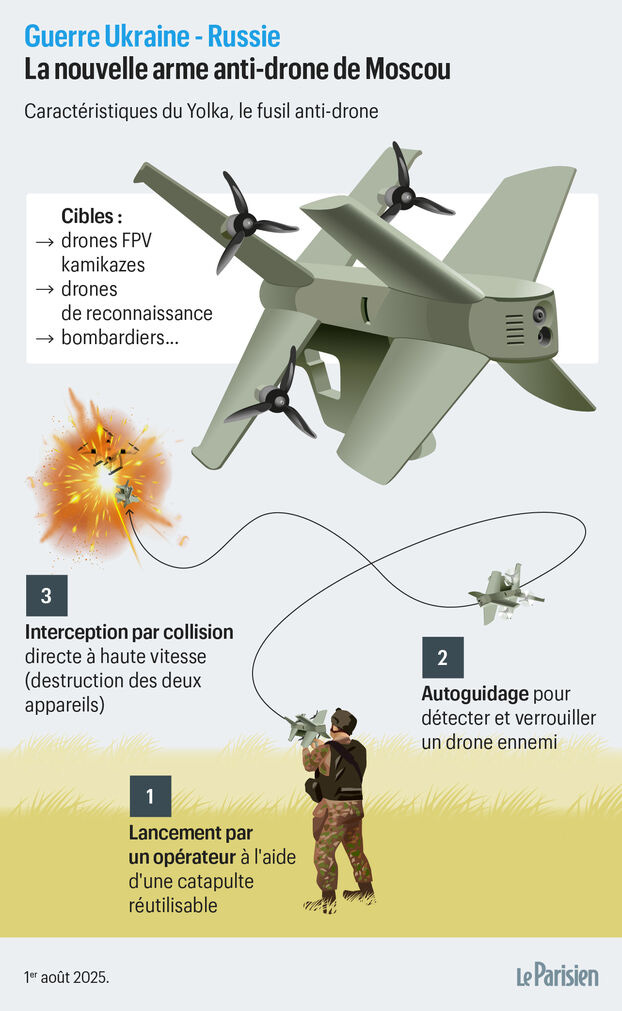
Russia faces three problems with Yolka. The Russians are having problems producing Yolkas in sufficient quantities which may indicate supply chain problems. Russia is also short on pilots and faces difficulty training qualified operators. The system is most effective in daylight where an operator can see the incoming threat. It does not work at night (unless the threat is illuminated), and it depends on good weather for operator visibility. Unlike the Ukrainian Sting, Yolka can’t be remotely operated at present so the operators are vulnerable if they are located on the front lines (where they must be outside, not in bunkers).
Yolkas could be deployed around sensitive locations such as military bases and critical infrastructure installations. Whether Yolka without an explosive warhead can knock out a drone larger than a plastic quadcopter isn’t clear. However, future versions of Yolka could be adapted with blast fragmentation warheads to help protect fixed sites.
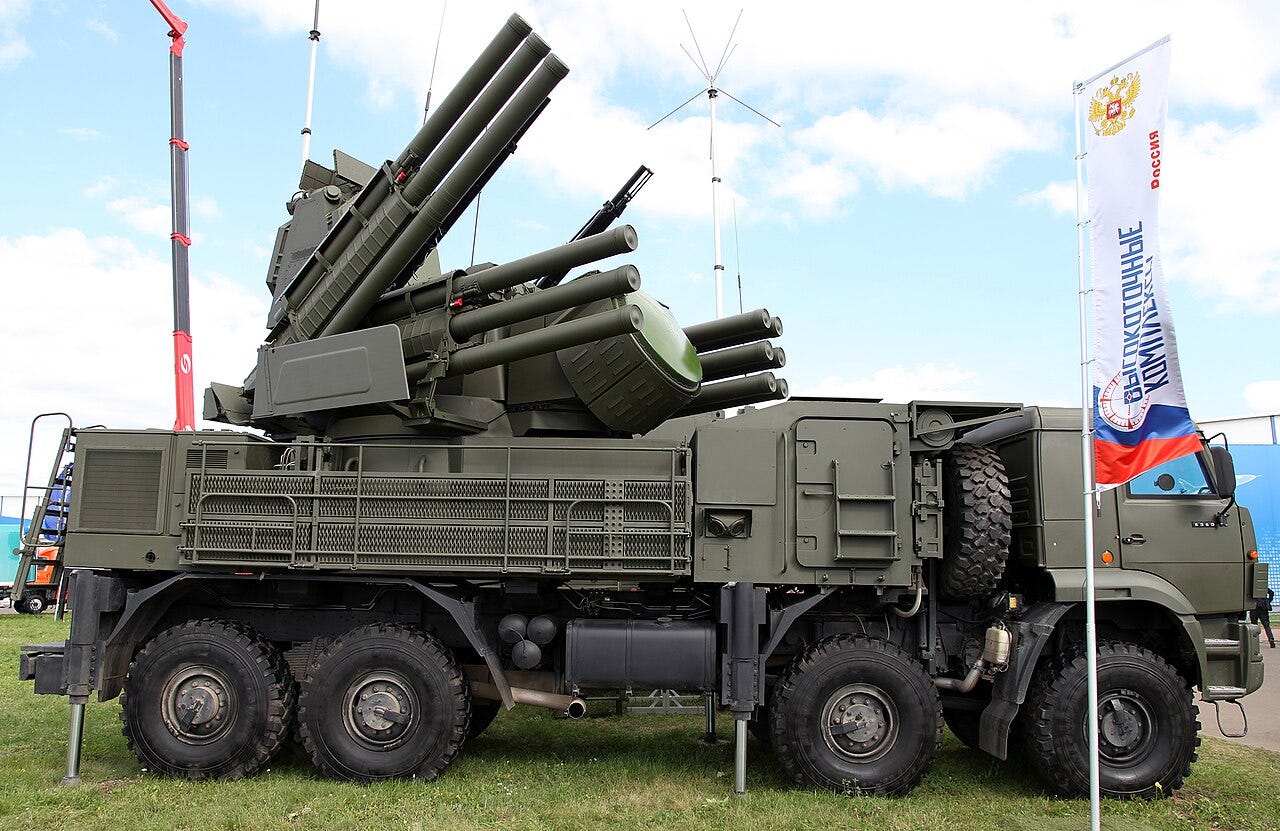
Russia is mostly depending on other far more expensive ground based systems such as Pantsir. Pantsir units are, however, in short supply, and there are thousands of high value targets in Russia Ukraine can attack. Pantsir also is less and less a battlefield weapon, mainly due to the fact that its radar is a beacon for Ukrainian weapons.
Sensors and Integration
A key factor in counter drone operations is detection and target management. Stand alone systems are hunt and peck, and can be overcome by mass attacks. Sophisticated sensors and target management, meaning integration of counter drone systems into a coherent defense cluster, is a critical ingredient in reducing drone threat effectiveness.
Counter Drone sensors come in different flavors. The classical model was electronic detection and jamming. Today’s battlefield is loaded with various electronic countermeasures that can block data links, spoof or block GPS, or derail operator/pilot communications. Modern drones use various techniques to fight against jamming operations such as frequency hopping radios sometimes with encryption, specialized hard to jam modem antennas, and software that can detect spoofing attempts. More recently, drones are using autonomous operating software with pattern recognition and terrain following, automatic evasive maneuvering, and artificial intelligence to improve capability. Starlink terminals and mesh networks also have significantly reduced the effectiveness of jamming and, in the case of Starlink, improved operational range.
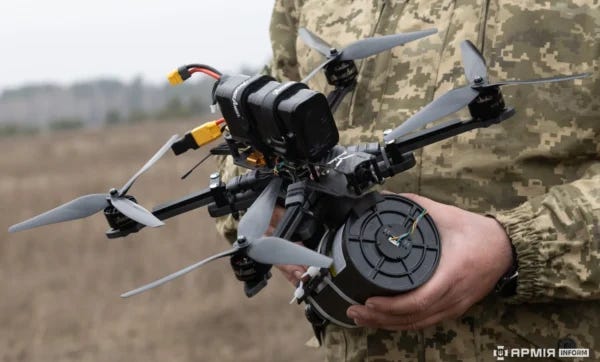
At the level of the battlefield, drones operated using fiber optic “wires” or cables provide operators with very high bandwidth imaging that can’t be jammed. The main limitation is range.
If a drone can’t be detected through radio frequency sensors, then detection must rely on radar, optical systems and sound sensors.
There are many different types of radars for drone detection. Some of them are millimeter wave (MM wave), FMCW or Frequency-Modulated Continuous Wave radars, X and Ku-band pulse doppler radar and Passive Coherent Location radar. Especially interesting is Micro-Doppler radar. Micro Doppler radars can detect the blade signatures of drones, meaning that it can be 100% certain it has sensed a drone and not a bird or other object.
Automated optical systems also are increasingly playing an important role, especially against “silent” (i.e. fiber optic) drones. The best of these fuse multiple bands of the electromagnetic spectrum into a single Pan-Tilt-Zoom (PTZ) gimbal to handle variable atmospheric conditions. These include Short Wave Infrared systems (SWIR). Unlike visible light, SWIR can penetrate heavy fog, smoke, battlefield haze, and marine glare. It relies on reflected light (rather than thermal emissions), providing sharp, high-contrast imagery that allows AI classifiers to discriminate drone materials (like carbon fiber or specialized plastics) from natural clutter. There also are medium and longer range systems that require sensor cooling. Such thermal sensors detect the friction heat generated by a drone’s electric motors, spinning rotor hubs, or internal battery packs.
Audible sensors listen for the sound of drones. Using microphone arrays Instead of a single microphone, audio systems deploy specialized geometric configurations of micro-electro-mechanical systems (MEMS) or high-sensitivity condenser microphones. By calculating the microsecond differences in time-of-arrival across the array, the system executes digital beamforming to determine the exact azimuth (bearing) and elevation of the sound source.
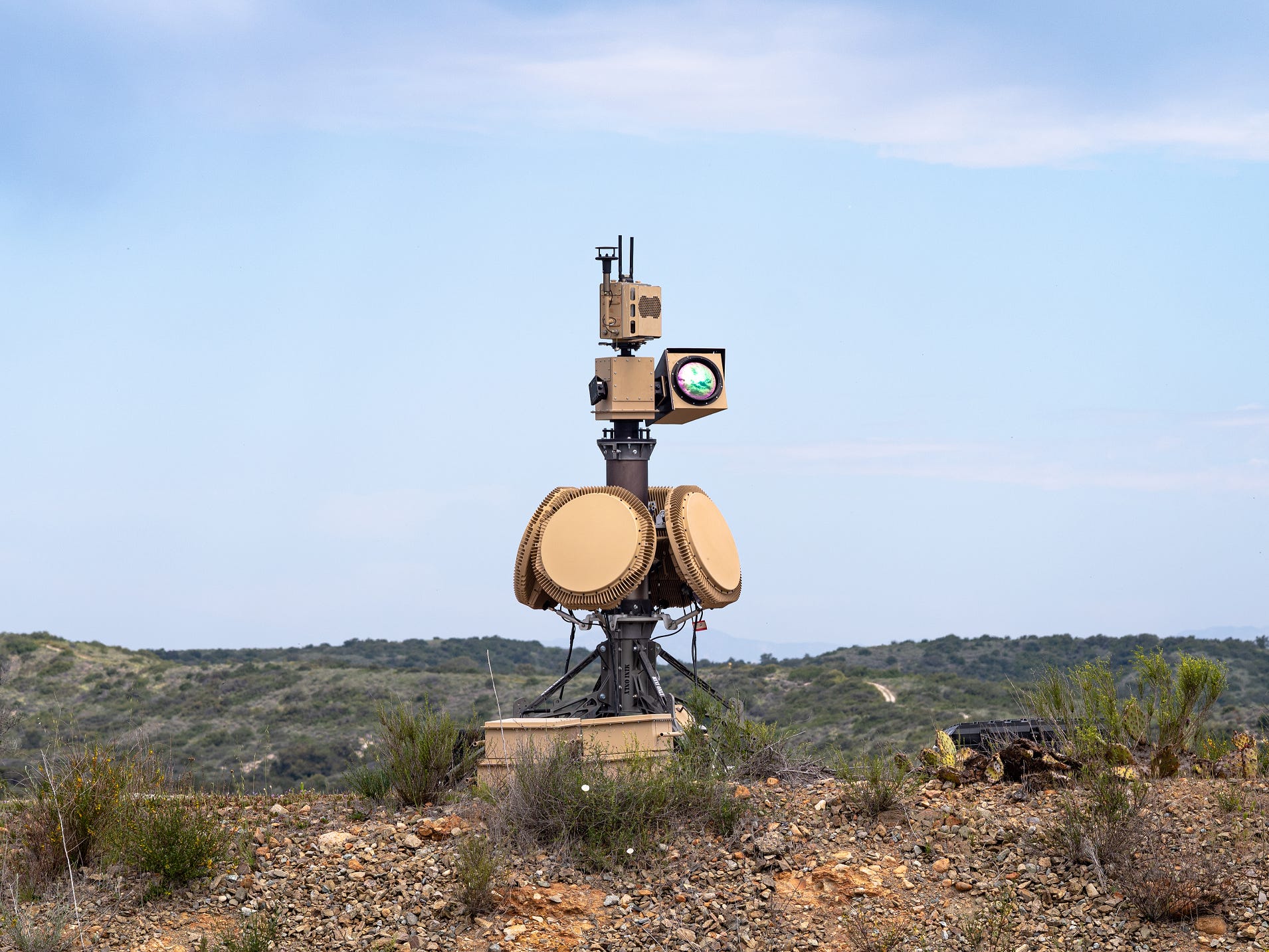
Different sensor platforms need to be integrated. The integration task is managed by Edge AI (such as Anduril’s Lattice operating system) running automated Convolutional Neural Networks (CNNs). The idea is not only to track a threat, but to assign a solution such as a laser kill system, a jammer, or a kinetic kill system and to keep updating information so that the kill system can follow and destroy the threat or to task another kill system if the first one fails.
Conclusion
Counter drone technology is rapidly evolving and becoming more capable. The idea is to close the intercept gap from current-day 70% to 85% to 99%. Solutions must evolve that can handle mass enemy drone deployments, evolving threat technology, and work both on the frontlines and against long range attacks.
Most importantly, counter drone networks need to be deployed rapidly. It will probably take at least another five years before fully integrated systems, with the latest sensors and interceptors, are widely available, properly supported, and operating teams are trained and experienced. If the 99% target can be reached, the drone threat will be more managed and far less lethal.
an excellent report!
Thanks for sharing this article with your readers.
Could you perhaps clarify why Ukraine’s ‘good remote operators and pilots, talented and motivated software engineers, and battlefield experience’ provide it with an advantage over Russia, as this seems counterintuitive.
Thank you again.