
Will Israel Build a Stealth Fighter Jet?
Odds are it will not despite the Prime Minister's Support

A senior Israeli official, likely Prime Minister Benjamin Netanyahu, recently briefed the Israeli press delegation who traveled to Washington in support of Netanyahu’s White House visit, regarding plans for Israel to build a domestic stealth fighter plane and an accompanying UCAV. The primary motivation, the Prime Minister has said in the recent past, is to ensure Israel can support its own aircraft without depending on the goodwill of outside suppliers. This concern has been heightened by recent military export suspensions from the UK, disruptions from France, and past supply delays from the United States under various administrations.

Netanyahu says the project timeline is ten years.
However, Israel faces significant constraints based on historical precedents and current resource limitations:
- Historical Precedent: While past domestic projects like the Nesher and Kfir saw success, the Lavi project was cancelled in 1987 because soaring costs threatened other critical military programs.
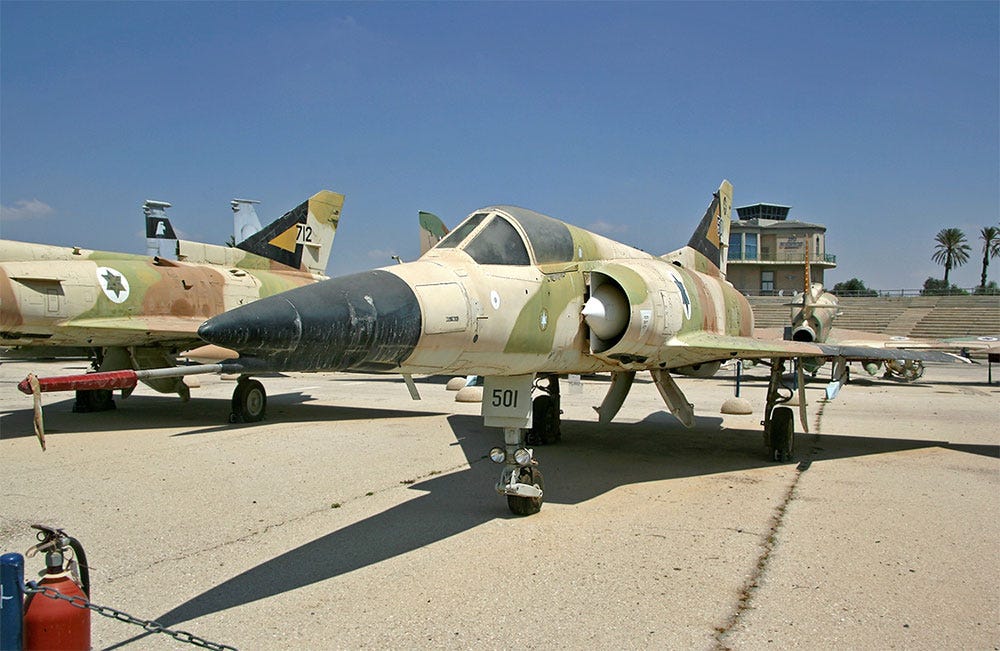
The Nesher was Israel’s first domestic aircraft based on the French Mirage 5. It used a French Snecma jet engine, but also included Israeli and US components. The Nesher was an effective platform in Israeli services until it was replaced by the Kfir. It also was updated and sold to Argentina and was used with some success against British ships in the Falklands War.
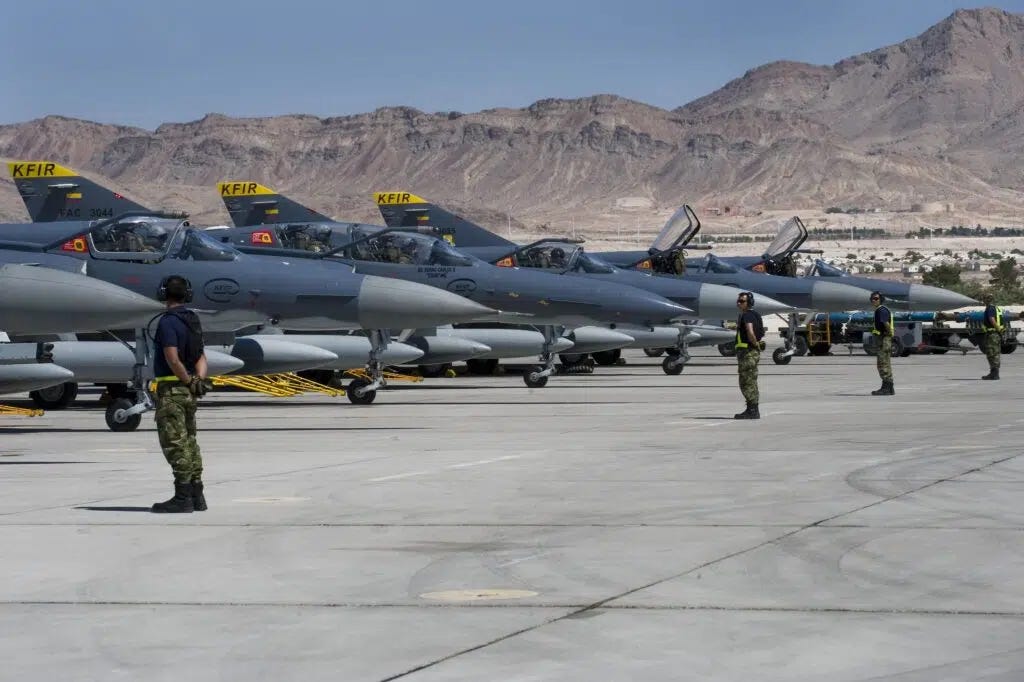
The Kfir was a Nesher follow-on, this time with more US avionics and with a US General Electric J-79 powerplant, the same engine that powered the US Phantom F-4. The Kfir was exported to Columbia, Ecuador, Sri Lanka and the US. Ecuador retired its Kfir fighters in 2012 after 30 years in service. Sri Lanka has seven remaining Kfir aircraft still in service. These were updated and modernized in Israel this year.
The Lavi never entered operational service. The Lavi project, which was an all weather fourth generation plus platform, incurred heavy cost overruns tying up over half of US foreign assistance funds in the early and mid 1980s. Internally there was opposition to the Lavi in Israel’s army because Lavi was shortchanging important projects including the Merkava tank and air defense systems. At the same time, US companies worried that the Lavi was a low-cost alternative to the F-16 and F-18. US aerospace companies lobbied the Pentagon and Reagan administration to halt funding support for the Lavi. In the end the Israeli cabinet killed Lavi in a dramatic 12 to 11 vote (with one abstention) in 1987.

Later it was claimed Israel sold Lavi technology to China where the technology was allegedly used in China’s J-10 program.
It is important to note that, despite a growing opposition in and outside Israel over the Lavi program, the US never stopped providing parts and equipment for Lavi.
There is still fallout over the Lavi cancellation which some in Israel regard as a major missed opportunity and damaging to Israel’s aerospace industries. There also is legitimate alarm that Israel’s friends and allies could cut off military supplies at any time, endangering the Jewish state. There is plenty of precedent for that worry. The Obama administration and Biden administration cut off important military supplies to Israel including Hellfire missiles, bombs, JDAM kits, tank ammunition, helicopters and other defense hardware. Similarly the UK recently stopped some 30 vital exports to Israel including parts for the F-16. The French meanwhile have deliberately interfered with supply chains of military hardware going to Israel and have blocked Israel’s access to important industrial defense exhibitions including Eurosatory and the Paris Air Show. Recently, Israel was alarmed by hostile statements from some in the Trump administration, especially Vice President J.D. Vance.
- Power Plant and Supply Chains: Any domestic stealth fighter or UCAV would require a propulsion system from Europe or the United States, with the US most likely a supplier. A new Israeli fighter would also compete directly with US defense companies like Lockheed, Boeing and General Dynamics, potentially requiring a US joint venture to mitigate opposition or some deal with the US limiting exports.
- Financial and Industrial Bandwidth: The immense cost could strain the Israeli economy and impact other vital programs, such as air defense systems and smart weapons manufacturing. Furthermore, major defense firms like IAI, Elbit, and Rafael are already heavily burdened with existing orders and current security demands.
The UCAV Alternative
A UCAV platform may be a more realistic option, as Israel is already networking advanced drones with the F-35 (Adir). A UCAV offers significant advantages, including the ability to pull extreme G-loads beyond human endurance and enhanced stealth capabilities by eliminating the cockpit canopy.
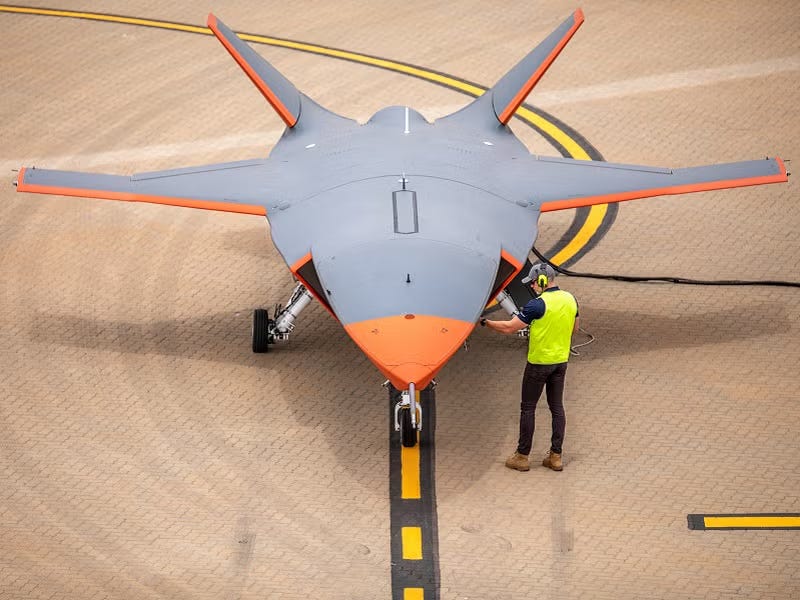
While Israel possesses strong combat experience, artificial intelligence know-how, and systems integration, a UCAV project would still require a US power plant. Additionally, the US is already developing its own “loyal wingman” Collaborative Combat Aircraft program, slated for initial operation around 2030.
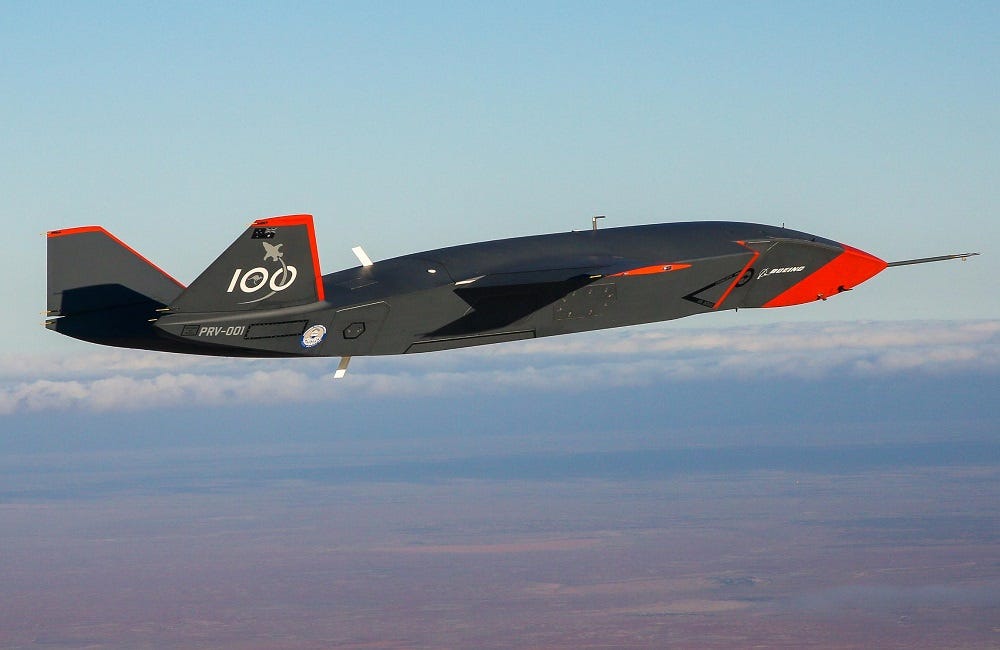
The US “loyal wingman” (F-47) is designed to enhance the combat lethality of the F-35 and de-risk the F-35 against deep high value targets such as air defenses and command and control stations. It also is aimed to later support the emerging NGAD (Next Generation Air Dominance) sixth generation fighter that supposedly will replace the powerful F-22.
Future of an Israeli Stealth and UCAV Project
Ultimately, Israel lacks the resources, manufacturing depth, and financing to simultaneously develop a domestic stealth fighter and a new UCAV from scratch. A more viable alternative may involve converting existing platforms into UCAVs. Israel faces critical strategic decisions ahead regarding the future of its local military aerospace manufacturing, and its leaders will have to see what is affordable and realistic for its military needs and its defense industrial base.
Odds are Israel will not build a stealth fighter from the ground up, and may rethink a UCAV to suit its requirements and cost impact.
An excellent but sobering report. Still, Israeli ingenuity is the best in the world. And smaller and inexpensive war fighting technologies are emerging. If any country can innovate, it’s Israel.
Ok, but can Israel pay for it this time?